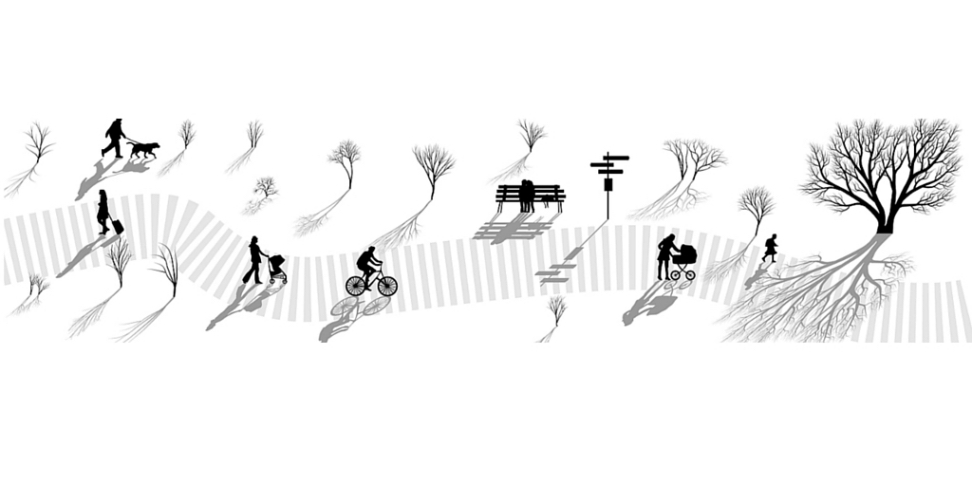
Emerging cityscapes in the next ten years

Posted by: DJ Post date: April 27th, 2010

Hunome has kept me very busy. When Frank at KedgeForward asked me to contribute an article it was a neat little break from the ‘on the business’ and ‘in the business’ and have a moment to think about one major aspect of our human condition.

I wrote a think piece on the emerging cityscape. My article is the second one on the page. The great thing about KedgeForward’s approach is that they take in all the articles at once and release them in pairs that look at the topic from different angles or even have a totally opposite view. You judge how me and my pair Chris Barnatt are positioned.

Transhumanism – Where does it stand? Where will it go?

Posted by: DJ Post date: February 2nd, 2010

You can find my point-of-view on transhumanism. It is part of a series of articles on the topic on KedgeForward.

Flows of knowledge

Posted by: DJ Post date: January 21st, 2010

What is witchcraft today may become science tomorrow

What is science today may become witchcraft tomorrow

What does that tell us?

1. Just because something is not proven through science does not make it less valuable fodder for our thinking processes

2. Just because something is proven through science does not mean that it will not be regarded as less valuable or even pseudo science tomorrow

After the middle ages [dark ages] through renaissance and modern era much has changed in the scientific method. This means that there should be less of a chance of viewing old science as pseudo science but rather just less ‘progressive’. Trouble is that the methods change also, not just the layers of knowledge we build upon. This leads to potential dismissal of earlier scientific findings.

What then is the moral of this story? We do need to think things through and not just take them as given. Some proof is always needed, at times though it has a lot to do with experiential and intuitive proof rather than scientific research. Often research starts when there is enough experiential noise to be noticed. Keep an open mind my friend ;-)

At times we have cycles: alchemy good, alchemy bad to alchemy in fact is what we do a lot, just not with turning everything into gold.

I am fascinated by the number of examples in philosophy where – through thinking things through without the help of a microscope or neuroscience – philosophers have been able to discuss humanity’s essence.

Hunome launched in private Alpha 1.1.2010

Posted by: DJ Post date: January 17th, 2010

Hunome has launched in Alpha.

I cannot believe it. I have not said anything about the launch on my blog. I guess that is because I’ve communicated it elsewhere.

What is Hunome?

It provides means for creating and enjoying short-cuts to insights about humanity.

Who is it for?

Those who need to understand what makes people tick in their professional, personal or intellectual pursuits.

This could be artists, social scientists, educators, marketers, product creators, philosophers, historians, futurists, designers, strategists, scientists…

How can I join?

We are currently in private Alpha.

This means that for a number of practical as well as a few strategic reasons we need to manage the number of people on the site.

Please register your interest on the Hunome site and we will invite you to join very soon.

I look forward to your presence!

Pastist – Presentist – Futurist

Posted by: DJ Post date: January 17th, 2010

Are you a pastist, presentist or futurist?

How would you know? Are these terms related to a particular personality profile, are they something in your upbringing, in your experiences or your firm beliefs. Does your orientation depend on what happened in the past, how your present satisfies you or what is in store for you, that you know of, in the future?

Disclosure #1

I like creating new words when what’s available does not help. My spell checker has trouble with pastist and presentist. However it has no trouble what so ever with futurist. How interesting and yet it is often the ‘futurist’ time dimension that people, not familiar with the tools and applications of it, have most difficulty with.

I guess one could argue that there is already a great word for pastist = historian. However, I believe what I am talking about here is a little [or a lot, you choose] different. I see a historian as a recorder of the past. Often also a communicator of it. Previously this was mostly done by professional drafters of the official past. Today this includes the every day stream on the net on what makes up humanity’s experience of the events. Love it! (more…)

Authors whose work I think will stick with me…

Posted by: DJ Post date: November 24th, 2009

Andy challenged some friends on FB to come up with their list of 15 authors that come to mind in 15 minutes and whose work we thought was going to stick with us for life.
1. Jostein Gaartner – “Sophie’s world” in particular
2. Agatha Christie – spent many a holiday in her plots when young
3. Audrey Niffenegger – “Time traveller’s wife”
4. Shakespeare – started with this only lately
5. Ken Wilber – while I am not a fan of theories that claim to explain everything, this offers good tools to think about things more broadly
6. Paulo Coelho – philosophical and human
7. Jared Diamond – deep knowledge about so much
8. Ayn Rand – a strong statement by Ms Rand who was directly impacted, now times are different but to write a philosophy into a few novels has not lost its novelty
9. Bruce Lipton – epigenetics
10. Norman Doidge – brain changing
11. Jurgen Habermas – knowledge, humanity, communication
12. Leonard Schlain – a silo breaker
13. Kurt Vonnegut – just so much fun, quirky
14. Jane Austen – wonderful depiction of an era
15. John Ralston Saul – brave boy

and then of course so many others but these were the first 15 that came to mind.

What makes humans unique?

Posted by: DJ Post date: November 24th, 2009

If we do not understand ourselves how can we hope to truly be in someone else’s shoes and have perspective? If we do not have perspective, how can we operate in a world of variation, even if ever so slight and seemingly insignificant? We like to display our uniqueness in many ways in amongst our own species, but how do we compare with other species on Earth?

Imagine that an alien group has finally had the chance to travel through time, breaking all our current rules about how hard all that would be. How would we explain ourselves to the new species? How would we compare? What would be the sameness across our species? The first step would be to explain human.

Many earlier ideas on what makes humans unique have been challenged. You can find more on that in for example Nina Rosenstand’s, a philosopher, book on Human Condition.

Only a few of the following seem to pretty much pass the test of ‘uniquely’ human: (more…)

Le temps de rêvasser

Posted by: DJ Post date: November 23rd, 2009

Aikaa haaveiluun

Time to day dream

The other day I was watching an interview with Jean-Marie Le Clezio, a nobel-laureate.

Half of what he said was in English and half of it was in French. He used one word, which struck me as a great word in French but for which the English word does not ring the same bell for me.

In French = rêvasser = also to think, to consider

In Finnish = haaveilla = day dream and also to dream or hope for x

In Finnish one can say: “Haaveilen uudesta asunnosta” “I dream of a new apartment”

In English = to day dream = similar to the Finnish meaning

In English one would NOT say: “I day dream of a new apartment”, but rather, “I dream of a new apartment”

The meanings are close but the usage is different. What Le Clezio was calling for was more time for day dreaming, pondering and considering – an experience for depth in one’s thinking rather than idleness often associated with the English word ‘to day dream’.

Languages are wonderful. The nuances of meaning in them is a source of constant amazement and confusion, from which one can discover beauty of variety in thought and culture.

Sustained or suspended?

Posted by: DJ Post date: November 13th, 2009

Some time ago I gave a talk in the US, as the event had to do with sustainability and leadership, I spoke about a continuum from the ‘disaster waiting to happen’ or being ‘suspended’ to having a good chance of sustaining an organisation’s existence for a long time.

I have looked inside large and small organisations and pondered on their DNA. What makes one company so much fun to work in and another a drag? While there are research and other documents out there [Collins and Porras: “Built to Last” as an example], this is based on my own experience and an image I found and altered when preparing for the talk.

In business one disease to avoid above all else is the “Spiral of Horror”. If you are within an organisation, which displays the symptoms of this difficult, but not wholly incurable, disease, I suggest you take a long hard look at the impact it has on you. After all, life is short and your humanity is precious.

Any and all resemblance to any one organisation I may or may not have worked for/in/on is purely coincidental. Most organisations display some of the symptoms and fight really hard against some of them.

Before I get to the symptoms, here are the key areas causing the symptoms, all a part of how a company acts:

  1. Disclosure: How it shares news [despite share market issues if public]?
  2. Relationships: How it engages with others? With what mindset?
  3. Issues: How it embraces changing environment and context?
  4. Structure: How it views ‘organisation’ and ‘ecosystem’?
  5. Leadership: How it enables thinking and acting?
  6. Intent: How it takes responsibility to delight?
  7. Doing good: How it enacts with purpose, for humanity’s benefit? (more…)

Climate change – humanity is paralysed

Posted by: dj Post date: November 10th, 2009

Sunspots, man made, sunspots, man made, believe it is ‘true’, believe it is not ‘true’, etc, gosh and this level of discussion helps us how?

For years humanity has been flummoxed by its own lack of ability to – once and for all – figure out what is happening with climate change. It is heating up, it is cooling down, it is in the sunspots stupid, it is man made idiot, it is caused by changes in the Golf Stream [cooling message for Northern Europe] and others etc.

About 30+ years the High School Certificate equivalents around the world have had versions of this  question. I had one for mine in the early 80s. At that time it was about greenhouse gases.

What I cannot quite figure out is why do we argue about it? We know that if we do not act in favor of what ever we can do to improve our livability systems, then we’re for sure having a negative impact, even if just on the air we breathe, the amount of rubbish we have to deal with, the cost of transporting endangered liquid like water or the amount of fish available in the oceans. I know these are matters, which are caused by other things besides the climate change but the results are on the same side of the equation.

Err on the side of action for improved air [if nothing more], when politics, science and human skepticism cannot come to an agreement. A classic flame war! Not a great one to bargain with and too big to  solve it by us all spending hours in weeding our veggie gardens. Wouldn’t it be nice though if the politics around this matter got real. I do not hear a lot of serious conversation in Oz about this, meaning open transparent involved conversation, not just politicians. It seems that in Finland people are seriously discussing what and how they could cut from their consumption, perhaps that summer cottage, which does not get used?

I just don’t think the solution is retrograde. What I mean by that is a solution, which looks backwards and seeks some rosy image of yesteryear. We live in a different context now, there are more people, our cities look different. A solution is needed, which consists of the best of the better parts available and builds towards a good life. A fabulous unintended consequence might be that we get happier not chasing stuff :-) and another one would be that we become more effective and healthy in how we feed ourselves….. but how will our economies cope? Well that’s just it, the biggie, it needs a change too if we are to be real about the solutions, change in the values and change in the realities of what and how we sell/buy.

Entrepreneur or Inventor?

Posted by: dj Post date: November 10th, 2009

Lately I have read, listened to and viewed many articles, blogs, views, opinions about investors and entrepreneurs. One aspect of what I’ve come across bugs me [at least...]

A view on terminology…

Entrepreneur

= Gets the business up and gets out

Inventor

= Has some cool idea and nurtures that forever, not interested in making money but focused on the product

How about the entrepreneur that has a long term interest in the business and would rather stay with it – even if in various roles – for a longer time?

Not the depart ASAP Entrepreneur nor the Forever Inventor…..but the realistic, flexible and yet passionate and caring entrepreneur, working with likewise oriented investor…

Emotional and rational future maze

Posted by: DJ Post date: November 9th, 2009

We must remember that the future is neither wholly ours nor wholly not ours, so that neither must we count upon it as quite certain to come, nor despair of it as quite certain not to come.

Epicurus, 341-270 b.C., Greek philosopher, Letter to Menouceus, The Essential Epicurus: Letters, Principal Doctrines, Vatican Sayings, and Fragments (Great Books in Philosophy)

This quote probably hit you as ‘so true’ for your personal life. Perhaps a personal goal, which you have trouble getting to or an emotional impasse you do not quite know how to deal with.

Here I’d like to expand on it a little from the perspective of ‘strategic foresight’, which is a systematic approach to deal with the future.

The quote is well worth unraveling a little.

It has in essence four parts, which all play into the way to think about the future systematically:

  1. Future is not fully ours
  2. Future is not fully not ours
  3. We should not count on it as certain
  4. We should not despair of it as wholly uncertain

Future is not fully ours

We cannot dictate the future in our private or professional lives. No matter who we are and what we do there are always elements, which are not under our control.

We can amass all details about trends, drivers and influencers and work them into very clear strategies, making those strategies a win-win for all stakeholders and engaging a passionate group of people behind them. It still does not guarantee that things will just roll as planned. People are fickle and what was a win-win one day no longer is necessarily that later. Sometimes it is not possible to keep the decision elements jelly enough to shape things according to all change. This means that sometimes we have to stay the course on things, which were set in motion before and turn our backs on the new, perhaps clearly better, possibilities. This particular aspect has changed a lot in business over the last twenty years. Things have become super liquid. (more…)

Human institutions – for humanity?

Posted by: DJ Post date: November 5th, 2009

I had the chance to join a friend to go to a preview of Michael Moore’s film Capitalism – A Love Affair. This preview had the added benefit of hearing what people thought of it, as Paramount and Toastmasters had set the session up to include a chat.

In amongst the many views were things like:

  1. The alternative is North Korea and MM is fat – this received a huge boo from the otherwise polite ‘toastmaster’ audience.
  2. Any system has its flaws, the film points to the dark side of humanity, which directly profits from the weaker, lining the pockets of the 1%, which is already rich beyond imagination [holds 95% of the wealth]
  3. A system which delivers the greatest good for the greatest number of people is needed
  4. Democracy, capitalism and socialism can and do co-exist, e.g. Finland and by the way even US. The point is to put the combined and balanced system together such that it is effective.
  5. The system fails as the laws, which were supposed to govern it have been overridden over time [financial deregulation, treasury powers in relation to the use of $700Bn; no recourse to inquire how the money is used]
  6. Good film but over dramatised to tell the story
  7. A film like this makes you think that there must be a better way
  8. Australia has been following the US ideals for 20+ years, over the last 20 years Australia has become one of the most litigious country. Gimme some of that mentality! Are we there too? Yes we are.
  9. You can be very rich today and on the streets with nothing tomorrow. It happens. The question is how a person is supported during those transition times? Illness, job loss, general economic conditions can make anyone become part of disenfranchised.
  10. The fundamental issue is in the values.
  11. Terminology like Democracy, Capitalism and Socialism get bandied about without due consideration of their meaning, nor how they apply in current world and era.
  12. Ronald Regan was a puppet.

Some of the points made in the film, my additions in [ ] (more…)

What a piece of work is a man….in search of truth – again

Posted by: DJ Post date: October 31st, 2009

I have been studying philosophy in the era of Shakespeare. As part of that I watched Kenneth Branagh’s excellent full-length version of Hamlet, set in 1800s, later than the original setting of the play, which was Elizabethan England. In this video clip is a soliloquy from act II scene 2. The same soliloquy in a very different, and fascinating rendition of Hamlet, with Ethan Hawke in the lead role, this latter is set in the modern times and in ‘Denmark Corporation’ rather than the court in Denmark.

On a light note, as I listened to this soliloquy I could not believe it, when I heard these words: “What a piece of work is a man, how noble in reason, how infinite in faculties…”, by this time music from ‘Hair’ was playing in my mind. ‘Hair’ happened to be one of two LPs I played over and over when I was about ten years old. The other one was Carmen Jones. Weird, huh!

HAMLET, Act II, Scene 2

I will tell you why; so shall my anticipation prevent your

discovery, and your secrecy to the king and queen moult

no feather. I have of late, but wherefore I know not, lost

all my mirth, forgone all custom of exercises: and indeed

it goes so heavily with my disposition, that this goodly

frame the earth, seems to me a sterile promontory, this

most excellent canopy the air, look you, this brave o’erhanging

firmament, this majestical roof fretted with golden

fire, why, it appeareth nothing to me but a foul and pestilent

congregation of vapours…What a piece of work is a man,

how noble in reason, how infinite in faculties, in form and

moving, how express and admirable in action, how like

an angel in apprehension, how like a god: the beauty of

the world, the paragon of animals; and yet to me, what

is this quintessence of dust? man delights not me, no,

nor woman neither, though by your smiling you seem to

say so.

The works of Shakespeare, H. Evans, P. Leyris, Cambridge University Press, 1957 (more…)

Purpose and value – a company perspective

Posted by: DJ Post date: October 29th, 2009

If you spent some time visiting several Fortune 500 web sites, how many of those do you think would clearly state their purpose and value to humanity? How many would have people in their brand somewhere? How many would talk about the passion they have for making the world a better place and how their actions bring that about?

I did that one year ago and there are some but not many. Mostly I found that those that have people in their brands and language do not have a ‘purpose’ statement. About ten years ago I did the same sort of study when I was with Nokia and found that a number of Japanese companies had a long term view and something like a ‘purpose’ statement – what was their role in this world, what benefit to humanity where they here to bring about.

The main objective of the company was to design and create innovative products, which would benefit the people. http://www.sony.com.au/section/sonysstory

This is not a mission statement, i.e. how to conquer some hill, but why do it anyway. Nor is it a vision, what could it all look like in some years’ time, if we all rally and make it happen (strategy – how). The focus is on the why.

One could say that all companies have people in their minds and brands to some extent: Facebook – making it easy to connect with friends, Google – making all things findable on the net [used to be: making it easy to find things on the net] and so on. There are many however for whom the purpose and product have disconnected because the ‘product’ is so entrenched in the society. The question of value to humanity is no longer considered to be of importance. I’d say the car industry has fallen into that trap and the banks just keep ignoring us, except for yet another credit card offer. (more…)

WP-Flex - Configured by KIX - Get your own copy
Wordpress theme developed by Simpler Computing and others - Wordpress and WPMU Plugins, custom code and more.